Walk into any French household and you'll spot it within thirty seconds. Not the espresso machine, not the copper pans hanging on the wall. The basket. Usually parked by the door or squatting on the kitchen counter like it owns the place, stuffed with lemons, a baguette, mail that nobody has opened yet. It's such a mundane object that most visitors don't even register it — until they try to find one for their own home and realise they have no idea what they're actually looking for.
That's the problem with French market basket essentials for the home: they look simple, they're sold everywhere, and roughly nine out of ten baskets you'll find online will fall apart within a year because the seller has no idea what a market basket is supposed to survive. I learned this the hard way. More on that in a moment.
What follows is what I'd tell a friend who asked me how to pick one, where to put it, and how to keep it alive past the first summer. Not a shopping list. A working method.
Key Takeaways
- Woven baskets are graded by weave density, not by how pretty they look on a shelf — a loose weave will sag within months under real load.
- The classic French format is roughly 40–45 cm wide with a 15–18 cm base: big enough for a full market run, small enough to carry on one shoulder without bruising your hip.
- Leather handles outlast rope by years, but only if the leather is stitched rather than stapled to the rim.
- Never store damp produce in a natural-fibre basket. One forgotten zucchini can blacken the base permanently.
- Placement matters more than styling. A basket in a hallway gets used; a basket styled on a shelf becomes furniture.
- Roughly a third of the "French baskets" sold online are Moroccan or Spanish in origin — which is fine, as long as you know what you're buying and the price reflects it.
What actually makes a basket French (and why most listings lie)
The French market basket isn't a French invention. It's a regional object that became a national habit. The shape you picture — wide oval mouth, flat base, two sturdy handles that meet in the middle — comes from a handful of weaving traditions that all converged on the same practical solution: a container you can load with four kilos of produce and still carry comfortably for twenty minutes.
Materials vary enormously, and this is where the marketing gets murky.
Materials, and what each one actually does
- Osier (wicker willow) — the traditional choice in northern and central France. Dense, heavy, ages to a honey colour. Costs more and needs occasional oiling.
- Palm leaf — lighter, cheaper, more flexible. Very common in baskets sold as "French style" because the weave looks similar in photos. Less rigid under load.
- Sea grass (jonc de mer) — soft, pale, prone to fraying at the rim where your hand rubs. Beautiful, fragile.
- Rattan — the workhorse of the category. Sturdy, forgiving, holds its shape for years if the weave is tight enough.
- Woven cotton or recycled fibre — not a market basket in any traditional sense, but a legitimate option if you want something machine-washable for laundry or toys.
Here's what nobody tells you: the material matters less than the weave density. Run your thumb across the base of a basket. If you can feel gaps wide enough to see light through, the base will bow the first time you put a litre of milk in it. Ten years ago, I bought a cheap palm basket online because the photos were gorgeous. By week three, the base had developed a permanent dip. I still use it, but only for light things — dried flowers, a folded throw. Six euros for a decorative object, fine. For a functional market basket, a waste.
The handle question
Two handle types dominate: stitched leather and braided rope. Rope is comfortable and cheap, but it stretches and darkens with sweat, and after roughly eighteen months of weekly use it starts to fray right where it meets the rim.
Leather handles are the better long-term buy, with one condition: they must be stitched through the weave, not glued or stapled on top of it. I've repaired three baskets for friends where the handle simply popped off because the manufacturer had stapled it. Not repairable in any way that looks decent.
The short version: buy for the weave and the handle attachment, not for the material name on the label. A tight rattan basket with stitched leather will outlast a loose osier one with glued handles, every time.
How to choose the right size for your home
Most buyers get this backwards. They pick the basket they like visually, then find a job for it. The reliable approach is the opposite: decide what it has to carry, then match the format.
| Use | Typical dimensions | What to prioritise |
|---|---|---|
| Weekly market run | 42–48 cm wide, 18 cm base | Rigid base, stitched leather handles |
| Fruit bowl on the counter | 25–30 cm wide, shallow | Tight weave, no lid |
| Entryway catch-all | 35–40 cm, deeper body | Straight sides so nothing tumbles out |
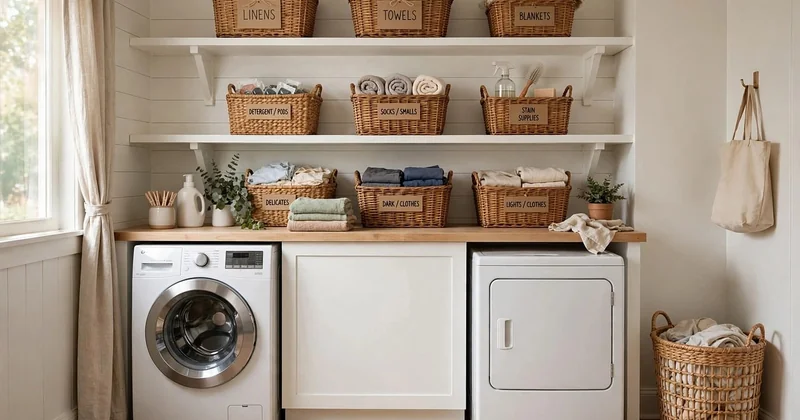
| Laundry or throws | 50 cm+, tall | Cotton or lined interior, handles long enough to carry on a shoulder |
| Bathroom storage | 20–25 cm | Sealed or varnished finish against humidity |
Notice that the market basket proper is the largest and sturdiest item in that table. Everything else is a secondary use. If you're buying one basket and want maximum versatility, go for the 42–48 cm format and accept that it'll look oversized on a small kitchen counter.
The one mistake I made that cost me a basket
I overloaded a 38 cm rattan basket with library books. Fifteen kilos, carried across a parking lot. The rim twisted, and once a woven rim twists it never sits flat again. The basket isn't ruined — it holds blankets now — but it stopped being a carrier. Baskets have a load ceiling just like bags do, and it's lower than you think. A full market run weighs around four to five kilos. Anything past eight and you're gambling.
Where to put it: five placements that actually work
Styling advice online tends to treat the basket as a decorative object. That's fine for photos. In practice, a basket earns its place in your home by being within arm's reach of the thing you need it for.
- Hung on a peg rail beside the kitchen door. The most traditional placement, and still the best. It empties on return from the market and gets refilled on the way out.
- On the floor next to the fridge. Less photogenic, more used. This is where mine lives.
- Entryway bench, lidless. Keys, dog leash, the mail you'll deal with later. Choose a shallow basket so nothing gets buried at the bottom.
- Bathroom, on a shelf above the towels. Only with a varnished finish. Bare natural fibre in a steamy room will develop a musty smell within a season — I've watched it happen to a friend's gorgeous sea grass basket in under four months.
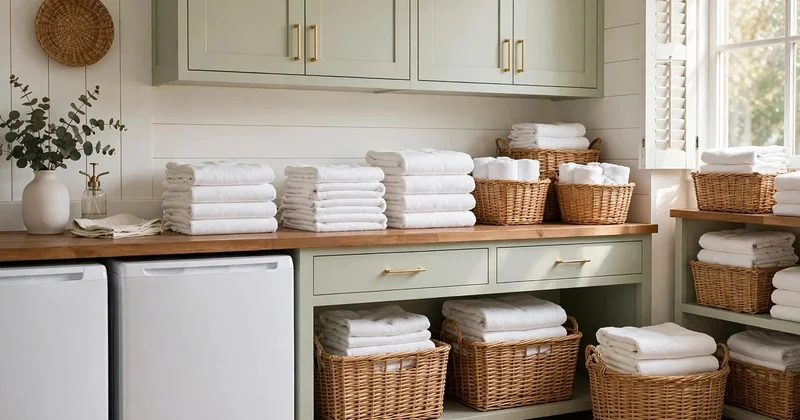
- Bedroom corner for throws and cushions. Tall format only. Wide shallow baskets look messy the moment you drop anything into them.
One placement to avoid: directly under a window in full sun. UV bleaches natural fibres unevenly, and you'll end up with a two-tone basket by autumn.
Care, cleaning, and making it last more than a year
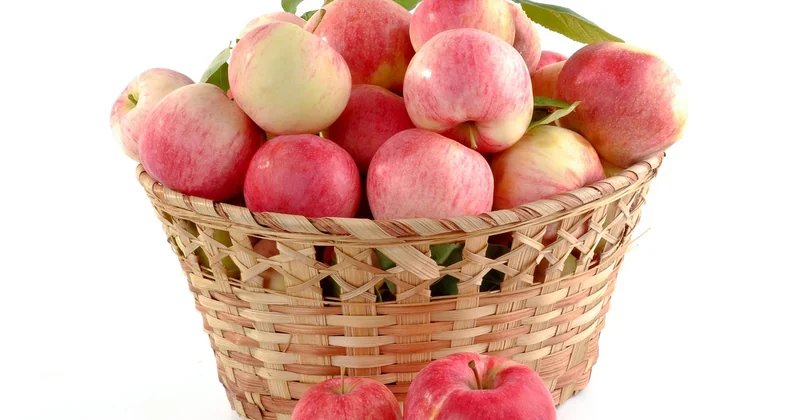
Natural baskets are surprisingly tough, but they have one real enemy: moisture trapped inside the weave. That's it. Everything else — dust, sunlight, occasional knocks — is survivable.
Routine care
- Shake it out weekly. Crumbs and produce grit settle into the base and grind against the fibres.
- Dust with a dry, soft brush rather than a damp cloth.
- Once or twice a year, wipe wicker with a barely damp cloth and let it dry fully in open air, away from a radiator.
When something spills
Blot immediately. Then let the basket air-dry in a ventilated room for a full day before putting anything back in. Never use a hairdryer — fast heat warps the weave. If a smell lingers, a small dish of bicarbonate of soda left inside the basket for a few days absorbs it, and I've used this trick successfully on a basket that had held a forgotten pear for a fortnight.
Repairs you can actually do yourself
Loose strand at the rim? A drop of wood glue and a clothes peg for an hour will hold it. Sagging base? Cut a piece of rigid cardboard or thin plywood to the base dimensions, slip it under, and the basket gets a second life as a storage piece even if it's finished as a carrier. Handle fraying at the attachment point? That's the one repair I'd outsource to a leatherworker or a shoe repair shop — they'll stitch it properly for a few euros.
What kills baskets fastest, in my experience: storing damp vegetables, overloading, and leaving them outdoors overnight in summer. Three causes, all avoidable.
Where to buy, and what a fair price looks like
Pricing in this category is chaotic because the same basket travels through three or four resellers before it reaches you. Here's a rough shape of the market, in my experience across several years of buying and replacing them.
| Source | Typical price range | What you get |
|---|---|---|
| Local artisan markets, French regions | €35–€80 | Hand-woven, often unbranded, provenance is clear because you meet the maker |
| Specialist home and garden shops | €30–€60 | Reliable quality, decent return policy |
| Large online marketplaces | €12–€35 | Huge variance. Some are excellent, many are palm-leaf lookalikes with stapled handles |
| Vintage and brocante | €10–€40 | Older baskets are often denser and better made. Check the base for rot |
My own rule: under €20, assume you're buying a decorative object and price your expectations accordingly. Between €30 and €50, you should reasonably expect five years of weekly use. Above €60, you're paying for craft, provenance, or both — legitimate, but know which one you're buying.
If you're shopping online, the product photos won't tell you what you need to know. Ask the seller two questions before ordering: how dense is the weave at the base, and how are the handles attached. A seller who can answer both clearly is usually a seller worth buying from. A seller who can't is a reseller, and you'll be paying a markup for a basket they've never touched.
DIY and other alternatives
If you're considering making one, the honest answer is that basket weaving has a steep first project. Coiled rope baskets — cotton cord wrapped and stitched into shape — are far more forgiving, machine-washable, and genuinely functional for laundry and toy storage. They won't give you the market-basket silhouette, but they'll survive a household with children, which traditional wicker won't.
For pure decor, dried eucalyptus or seasonal stems in a small woven basket on a shelf is a fifteen-minute job and it looks intentional. Just don't expect that basket to hold anything heavier than a stem.
The basket that earns its place
Here's the thing about this object that I keep coming back to. A French market basket isn't valuable because it's beautiful — many of them aren't, particularly after a few years of honest use. It's valuable because it's the rare household item that connects the kitchen to the outside world. You carry it out empty, you bring it back full, and everything in it came from somewhere real.
That's why the ones hanging in French hallways are often battered. They're not styled. They're used, weekly, by people who don't own a second one. If you buy a single well-made basket — tight weave, stitched leather handles, 42 to 48 centimetres — and you keep it dry, don't overload it, and hang it somewhere you'll actually pass on your way out, it will outlast most of what's in your kitchen.
And if it doesn't? You'll know within six months, which is faster than most furniture tells you the truth.